Landscapes
& Nature
Southern 'Massif Central'

causses-cevennes.com

Architecture
Art & Culture
Enterprises
Fauna & Flora
Geology
History
Hiking
Links
Real estate
Regional products
Roadmaps
Tourism

B&B
Chambres d'hôtes

B&B Gîtes d'étape

Campsites

Hotel-restaurants

Holiday cottages
Regional products

Sportive activities

Skiing Southern France

Alternative holidays

Art & culture

Small business

canoeing
Gorges du Tarn

1 day or holiday
tarn-canoe.com

Old Postal cards of :

Florac
Ispagnac
La Malène
Le Pont de Montvert
Le Rozier
Les Vignes
Mende
Meyrueis
Montbrun
Ste Enimie
St. Germain de Calberte
Quezac
Portraits

causses-cevennes.com
|
|
 |
History and divers subject according to
"France Pittoresque" document of 1835
|
HISTORY
A people, that César
named Gabali and Strabon Gabales, lived,
at the time of the Roman conquest, the country which forms the department of Lozere
nowadays.
This country was included by Auguste in I' Aquitaine. - Gabalum, old city of the Gabales,
which had taken under the Romans the name of Anderitum, about year 250. It became the a
bishopric.
The Visigoths who seized the country, with the decline of the Roman empire, were driven
out by Clovis.
You can read in Gregoire de Tours that this country was called then Terminus gabalitanus
or Regio gabalitana. The writers of the Middle Ages named it Pagus gavaldanus. This last
word formed thereafter the modern name of Gevaudan.
Some writers, great fans of etymology, claim that the old name Gabales is formed of word
Gavacho by the Spaniards, by which they designated the French. This prejudicial nickname
appointed initially the inhabitants of Gevaudan who, living at their sterile landss, were
obliged to leave and earn their living in Spain.
Gevaudan had, under the Franconian and Carolingian kings very particular counts, who made
themselves hereditary in Xe century.
In the XIe century a certain Gilbert, who married Tiburge, countess of the Provence,
appointed himself count of Gévaudan. This Gilbert had a daughter who was married to
Raymond Béranger, count of Barcelonne, and thus gave him all the rights on Gévaudan,
Carladès, etc
The dominion of the counts of Barcelonne, on Gévaudan, was the reason of a serious
argument with the bishop of Mende, who considered himself lord and count of the country.
One of his bishops, Adelbert, went, in 1161, to see Louis-the-young person to render him
homage of the Gevaudan and to swear his oath of fidelity> You can imagine that it was
welcome to the King who hastened to make him lord of the Gevaudan, and yielded even the
regalities to him.
Nevertheless, the counts of Barcelonne continued to benefit the direct seigniory of
Gevaudan, where they had the castle of Gredon (Grèze), an inaccessible fortress, located
on a bluff rock.
In 1225, Jacques, king of Aragon and count of Barcelonne, decided to yield the castle of
Grèze and the Gevaudan to the diocese and chapter of Mende. But it is to believe that
this transfer only concerned the seigneurial title and that Jacques kept the useful land,
since, by a transaction passed in 1255 with Saint Lewsi, the king of Aragon renounced
then, not only his rights on the ground of Grèze, but also those of the Gevaudan.
The bishop of Mende preserved the sovereignty of the country until 1306; at that time, and
for better securing the possession of the remainder, he yielded the half of it to king
Philippe-the-Beautiful, who granted him the title of count of Gevaudan.
We dont know the precise time when the union of the Gevaudan and the Languedoc took
place in the States of Gevaudan; which were divided into the high
country and the low country by the river Lot.
STATES OF THE GEVAUDAN.
The Gevaudan consisted before the
revolution of 1789 of several states which assembled each year, alternatively in the town
of Mende and that of Marvejols.
The bishop of Mende was the president; he came there assisted from his grand-vicar, who
had neither row nor deliberative voice, but he chaired in absence of the bishop.
The assembly was made up of 7 representatives of the clergy, 20 of the nobility and 22 of
the third-state, total 50 members including the bishop.
The representatives of the clergy were : a canon, deputy of the chapter of Mende, the dom
of Aubrac, the prior of Sainte-Enimie, the prior of Langogne, the abbot of Chambons,
le.commandor of Palhers and the commander of Gap-Francè
The representatives of the nobility were : eight barons, who entered annually in the
States of the country, and per turn, of eight in eight years, with the state-Generals of
Languedoc : the baron of Tournel, Roure, Florac, Briges (before Mercoeur),
Saint-Alban(before Conilhac), Apchier, Peyre, Torahs (before Senaret).
Twelve gentlemen, ground owners having the title of
Gentilshommeries : Alleux, Montauroux, Dumont, Montrodat,
Mirandol, Séverac, Barre, Gabriac, Portes, Servièrès, Arpajon and Guarde-Guerin. This
last one took in the assembly, the noble quality of consul of Guarde-Guerin.
These barons and gentlemen could be represented by personse not belonging to nobility; it
was enough that they were of a honourable state, such as that of lawyer or doctor.
When there was no baron in the assembly, the assisting gentlemen could replace the the
nobility.
Lastly, the deputies of the third-state were: three consuls of Mende or Marvejols
Three consuls of Marvejols, when the states were held in Marvejols; but when they were
assembled in Mende : only the first consul and a deputy of each of the sixteen cities or
communities.
The officers of the country were the instituted syndic and the clerk, or the yearly
appointed syndic and the clerk by the general assembly.
At Marvejols a royal baillif and officers, in Mende, a baillif and officers appointed by
the bishopric, managed alternatively the justice of the bailiwick of Gevaudan. These two
baillifs were alternatively also ordinary commissaries in the assemblies of the country.
 |
chemist Chaptal
member of the istitut
Minister of Interior Department
senator and par of France |
ANTIQUITIES
Druidic antiquities are very numerous
in the Gevaudan, like dolmens, peulwans, wandering stones shaking etc.
They mention the dolmens of Aumède, Fonds, Grèzes, Malavielhette, Montet, etc; and the
peulwan of Sainte-Hélène, on the right bank of the Lot, which is called Lou
Bertel de las Fados (the spindle of the fairies).
The Stones of Lagarde are considered by the some as druidic monuments, others assert them
the result of a natural accident.
It is believed that the fountain of Canourge is a Gallic fountain.
The monuments of the Roman period are the tomb of Nougeole or Lanuejols (about which we
speak some further), a military road with various junctions, a castrum, a camp (that of
Milan), currencies, medals, ustensils, fragments of pottery, etc.
They discovered in Pavols, on the site of the antique Gabalum or Anderitum, the vestiges
of a cirque, a column with inscription and other interesting antiquities.
The monuments of the Middle Ages are very multiple : old castles, antiques churches, old
abbeys , etc.The majority of these monuments offer curious details of Roman,Gothic and
other architectures; like a small chimney in Auroux built in the time of the crusades,
with the shape of a minaret.
 |
costumes
of the
Lozère |
CHARACTER, MANNERS, ETC.
Living in the middle of mountains, in a poor and arid region, exposed to the attacks of a
vigorous climate, the farmers of the Lozere have necessarily agresticural manners.
Nevertheless their character is friendly and straight. They are naturally soft and even
gracious towards the foreigners, peacefully subjected to the authorities which they
respect and full of devotion, respect and love to their parents.
Their life is hard with heavy work and the majority have to fight against the natural
sterility of the country of which they own little parts.
Their food is simple and frugal: it is composed of dairy produce, butter, cheese, bacon,
salted cow, dry vegetables and rye bread. They join to it potatoes or chestnuts.
Their usual drink is the source water, but they also like wine and happened to become
drunk when they go to fairs or other occasions in the villages with rare amusement.
Their dwellings, generally low, dark and humid are inconvenient and unhealthy.
Both catholics and Protestants are strongly attached to their religion and great amateurs
of religious ceremonies, they all have an equal respect for the ministers of their worship
They also preserve with tenacity their customs, are attached to their prejudices, their
agricultural routine and the coarse costume which they carry since their childhood.
They are little hastened to change, even when their interest might benefit from changing.
Their slowness let little place to projects of improvements.
Everybody has a great attachment for his village. The young ones are really unwilling to
leave for military service, and the lozere counts the most latecomers. Nevertheless, when
they joined the battalion, they show to be intrepid and disciplined soldiers. They are
very proofed against the tirednesses of the war, being of a strong constitution and a
robust temperament.
The inhabitants of the cities have naturally more amenity in their character than the
inhabitants of the campaigns; but like them, they are sparing and hard, and however
hospitable and charitable.
Two of the prices of virtue that the French Academy distributed in 1832 and 1833, were
decreed to lozerien ladies. Mrs Guiraud (born Suzanne Géral), one of them, undertook
numberless acts of charity.
The inhabitants of Lozere in general, have intelligence, natural spirit and a healthy
judgement. They cultivate little the letters and arts; but they succeed rather well in the
study of the natural science and mathematics.
LANGUAGE
The patois of Lozere takes part of the patois auvergnat
and Languedocien. - One finds a great number of Spanish terms.
The pronunciation of some words of Latin origin or French is even Spanish; what is
explained by the relations of the former inhabitants of the country with Spaniards.
Everytime that, in a word, the CH consonants are preceded by a vowel, one pronounce as if
there were TCH.
This patois is of use by the inhabitants of the campaigns and the workmen of the cities.
It has grace and vividity, and lend itself to an energetic way of speaking and the
expression of caustic and spiritual thoughts.
The French speaking people preserve in their language the particular accent of the South.
To give an idea of the patois of Lozere, we will quote some verses of a translation of the
parable of the infant prodigy- (bible)
Un omé abiou dous fils.
Lou pu geouve d'aquélei diguéti à soun pero: "Moun pero, douno mi la part del bè
ché ( pronounce qué), mi deou veni"
Ensi Iou pero li diviset soun bè.
Paou de geours après, aquestè pu geouve fil amasset tout aquo siou, s'en anét din un
peïs éloignat é y dissipét tout soun bè en viven din Ia débaucho ( pronounce
dèbaoutcho)
Après qu'aguét tout despensat arribét uno grando famino dia aquel peïs e el commencét
d'éstrè din l'endigenco.
Alors s'en anét é si méteguét al servissé d'un des abitants d'aquel peïs, che Iou
mandét din sas possessions, per faire paissé lous pouors.
E aouvio bè bougut si rassasia de carrongeos che Ious pouors mangeabou ; mè
persouno noun l'en dounabo. |
A man had two sons.
The youngest said to his father :
"my father, give me my part of your goods.
So the father divided his property.
A few days later, the youngest of his 2 sons heaped
all he had, left to a
remote country, were he dissipated all his goods
in debauchery.
After he had spent everything, happened a great famine to this country, and he
started failing necessaries of life.
Thus he left and offered his service
to an inhabitants of the country, who asked him keep the porks at his property.
There he might have been lucky to fill his belly of the rests of the porks food,
but nobody gave him anything of it. |
BIOGRAPHICAL NOTES
Among the distinguished men of the Lozere, for various reasons belong :
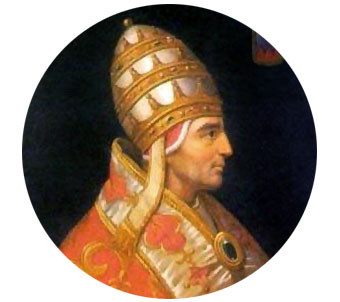
pope URBAIN V, cardinal BLAIN, knight GUERIN, bishop of SenIis, who commanded the French
army at the battle of Bovines;
troubadour PERIGON, famous in XIIIe century: the famous chemist CHAPTAL, who was member of
the Institute, Minister of Interior Department, senator and par of France; Rene of BERNIS,
PELET (of Lozere), and the former prefect · DE NOGARET, estimated administrator; several
men who belonged to our political assemblies during the Revolution: LESTERPS-BRAVAIS,
LESTERPS, MONESTIER, SERVIERES; various general officers of the Republic and the Empire -
BORELLI, BRUN OF VILLERET, CHALBOS, MEYNADIER, THILORIER, etc;
the knight DU SAILLANT, gentleman of Gévaudan, who commanded the famous camp of Jalés;
the famous RIVAROL, one of the most spiritual literati of the XVIIIe century
Pierre DAUDE, translator and biographer; the publicity agent SALAVILLE,
the doctor BALDIT, who made known the properties of thermal springs of Bagnols;
physicist BLANQUET, poet and literati man; etc. 
TOPOGRAPHY
The department of Lozere is a mediterranean department, region of the south,
mainly formed of Gevaudan and parts of the former dioceses of Uzés and Alais (Languedoc).
Its limits in the North are the departments of Haute-Loire and the Cantal, in the
east, those of the Ardeche and Gard, in the south, those of Gard and Aveyron; and in the
west, that of the Aveyron.
Its named after one of its principal crossing mountain chain. Its surface is 509,543
arpents metric.
GROUND
The territory is divided naturally into three areas: in north, the granitic zone, in the
center, the calcareous zone with a schistous base and in the South, the purely schistous
zone.
At the two ends of the department in the East and West, are some volcanic grounds.
MOUNTAINS.
The lozere is furrowed by severalpmountain chains, ramifications of the large chains of
the Cevennes. The average height of the plateaux is in between 750 A 1000 meters above the
sea level. That of the three large buttresses of which they depend (Margeride, Lozere and
the mountain of Aubrac) is 1350 to 1500 meters
The Margeride gives birth to the Trueyre-river, one of the principal affluents of the Lot:
the Mount Lozere is the source of the Lot and Tarn. - the Aubrac, which rises at the
Western extemity of the department, on the border of the Aveyron, does not give birth to
any significant river.
In the East and South-East on the demarcation line with the Ardèche, rises the principal
mountains of the Eastern Cevennes which is the source of a great quantity of rivers, among
which the AIIier.
The Gard and Gardons rise in the most southern part where are the mountains of Aigonal
(Mont Aigoual).
The Lozerian mountains offer old voIcanic vestiges, escarped rocks, caves decorated with
stalactites, beautiful cascades, wild and gracious sites, finally all the picturesque
versatility of a mountainous country.
Mount Lozere, which gave its name to the department is a mountain chain which is less
remarkable by its height than by its beautiful pastures and the nature of its rock,
of quartzose granite mixed up with black mica and feldspar, enormous blocks, armed with
truding points, serving like natural lightning conductors they say.
Here the height of the principal mountains and some other high places of the Lozere :
Le plateau du Palais du Roi .........1.548 meter.
La Margeride ...............................1.519
La Lozère.................................. .1.490
La source de l'Allier......................1.532
La Cham de la Roche. ..................1.328
Le mont Mimat, environ .................1.111
La Causse de Sauveterre, environ.. 975
Le pont de Langogne..................... 896
La Causse de I'Hospitalet, environ. . 780
Le Bois des Armes (sources du Tarn
et de la Ceze) .................................770
* Some authors give birth to Rivarol river in the Gard, others in Bagnols-les- Bains, in
the Lozere.
FORESTS
Large forest are those of the Mercoire, Fau-des-Armes, Calcadis, Champeros, le bois Noir
and Augoual (Aigonal in the text)- composed of oaks, birches and pines chenes, of hètres
or pines
The forest of Gourdouse, is mainly consisting of birches, of which the most common specie,
is called Fayard.
Their surface counts 32,599 hectares, of which 1,437 belong to the State, and 2,875 with
the communes.
LAKES
The department has four lakes, situated in the mountains of Aubrac : the lake of Born,
Saint-Andéol, Soubeyrol and Saillans.
The circular shape of the Lake Born makes believe that it is the crater of an old volcano.
The Lake Saint-Andéol, the largest one, seems, if not been dug, at least increased by the
work of the men. At water level you can distinguish the points of the beams which were
used to consolidate the foundation of a dam. - These two lakes are very full of fish.
The lake Soubeyrol and Saillans communicate by the river of la Garde. For a long time
there was a project to reclaim them, which easily would create 40 hectares pastures.
RIVERS
The department contains a great number of rivers with lively excellent water. None of them
is navigable.
The four principal rivers which have their source in the Lozere are the Lot, the Tarn, the
Allier and the Gard, they gave their name to four surrounding departments.
There are seven more, secondary rivers which are: the Bès (affluent of the Trueyre), the
Trueyre and Colagne (affluents of the Lot), the Chassezac (afluent of the Gard, and
theTarnon, Jonte and Mimente (affluents of the Tarn).
The mountains of the Lozere and Cevennes, which give direction to the watercourses , send
the water of the Lot, Tarn and Allier to Ocean, and that of Gard into the Mediterranean.
ROADS
The department has 24 royal or departmental roads; nevertheless most of transport still is
made there by mules and donkeys.
METEOROLOGY
CLIMATE
The atmosphere is prone to abrupt variations in temperature, it passes sometimes in the
same day of a sharp heat to an intense cold.
The region has in general a cold and wet climate. In north, the winter lasts six months,
and in certain years, nine months; in the South, it lasts only four months.
In general, the temperature is only in warm in the Cevennes valleys, situated in the
south.
The winter usually is rigorous, spring rainy, the summer stormy and the autumn beautiful,
but only towards the end.
The thermometer extremities are commonly - l5° and of + 25°C.
WINDS
The dominant winds in the North are those of the North and the East, and in the South of
the department from the West and South.
For the silk-worms they fear Eastern wind, which is dry and hot and called the
white mariner.
DISEASES
The country, in general, is healthy for men and animals: all are robust and vigorous.
There are few epidemic diseases; the intermittent fevers are rare here.
The most common diseases are the rheumatic affections, catharrac, hydropisies and a sort
of scurvy.
They sometimes suffer goitres in the small valleys of Malzieu and Saint-Léger.
NATURAL HISTORY
FOSSILS
Some localities of the department contain fossils. There is a great quantityof them in the
commune of Barjac, like several un-indentified ammonites discovered by Mr. Ignon son (of
Mende) and rests of the ictyosaurus.
ANIMALS
The department contains few horses and a greater number of mules and donkeys.
The sheep are small, but produce a fine and good wool.
The goats, also of small size, are vigorous.
Of the wild boars, stags and roe-deers populating the forests formerly; are not present
nowadays, except some roe-deers, hares and rabbits in great, badgers in small number. The
fox is more common.
The vast the forests of the mountains gives asylum to wolves of big size and very wild.
The famous Bete de Gevaudan of the past century, hided in these
forests and was of this race of wolves.
In the last ten years, in between 1821 and 1830, they killed 515 wolves andwhelps.
The dog chien de parc is a beautiful race, and its force equalizes
its heat for hunting wild animals and defending herds.
Among the birds of prey one notices the golden eagle; the winged game is abundant. Other
figuring birds are : One finds there the gilded plover, the sarcelle, partridges, trushes,
ruails, woodcocks, etc.
Finally the rivers and the lakes provide excellent trouts and eels.
VEGETALS.
The Flora of the department is rather rich.
One finds there especially poisonous plants known as effective remedies, such as the
conium, the jusquiame, the napel, colchic, the soft-bitter, the flammule, the pulsatile,
foxglove and arnica.
The number of used plants in medicine or arts, is about 800.
The garance, the tanners grass
(coriara myrtifolia), the dyers broom (genista tinctoria), the parella grows here
spontaneously.
Tobaccoprosperred in the mountains of Aubrac when the culture was allowed.
MINERALS
The mineral and metal richnesses can be compared with those of Hartz in Westphalia and of
Freyberg in Saxony.
They dig silver-bearing lead, copper, antimony, litharge, potters' lead, marble, porphyry,
granite and gypsum.
The silver-mine of Vialas produces 7 to 800 grams of silver per 100 kg.
There are still numerous unexploited mines of iron and coal, manganese, kaolin, etc.
There are quarries of gypsum crystals, sapphires, etc.
After heavy rains their can be found gold spangles in the Gardon and Cèze river.
The peak of Muret, an old volcano contains much minerals.
Mineral water
The department counts a great number of medicinal springs (cold and acidulous) in Sarrons
- close to Saint-Chely, in Saint-Pierre - close Malzieu, in Javols, Colagne,
Mazel-Chabrier, Mazel-de-Laubies, at the rock of Saint-Amans, in Laval-dAuroux,
laval dAtger, Quezac, lspagnac, Florac, etc.
The chemical analysis arranges this various waters among aerated water, they contain
carbonic acid, are and tonic and creatin appetit.
Saint Leger-de-Peyre has several sources of copper water with purgative properties, some
glasses makes vomiting.
The thermal and sulfurous springs of Bagnols- the Baths are known for a long time. A few
years ago they created a thermal station in Chaldette, commune of Brion, district of
Marvejols, its water has similar beneficial effects as that of Bagnols les Bains. 
Page 2 History Lozère
© 1998 -2008 causses-cevennes.com - lozere.net
- mentions
légales -
Agence
la Bastide -
creation-internet-site.com
|
|