![]() |
![]() |
Grand corbeau Kolkrabe |

grand corbeau, raven, raaf,
corvus corax, kolkrabe, korp, corvo imperiale, cuervo
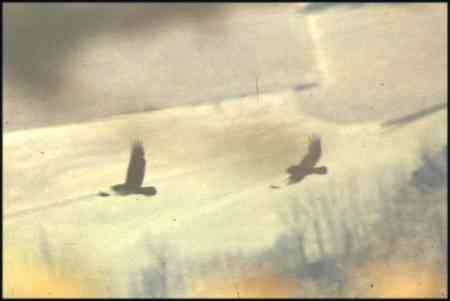
| Grand corbeau Le plus grand des corvidés (1m.20 d'envergure), bec assez long, robuste. Après avoir été rare après la dernière guerre il est de nouveau assez commun. Abondance très variable, en général faible Se distingue des corneilles par la grande taille, le bec noir massif, les plumes hérissées de la gorge, l'extrémité cunéiforme de la queue plus longue et la voix distinctive. Plumage noir , iridescent sous la lumière. Vol puissant, direct, souvent plané et glissé; vols nuptiaux acrobatiques. Omnivore. Cà et là en troupes. Voix: 'Cro' ou 'rrok' bas, répété, ou 'rok' plus haut; Il niche dans les falaises des gorges du Tarn,de la Jonte et dans la vallée du
Lot
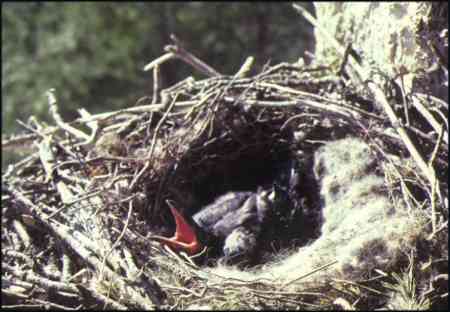
In general the most advanced in evolution, the most intelligent and most adaptable of all birds . The largest all-black bird of the region; adult can be told from all other crows by huge size, as large as a Buzzard, stouter bill and distinctive voice. Even juvenile shows the greater length of bill, head and neck projecting in front which can give the adult an almost Maltese-cross appearance on wing. Has a longer neck and stouter bill than smaller Carrion Crow and Rook. Chief call a deep croaking 'pruk, pruk'; beware similar less deep note occasionally heard from Rook. Flies rather heavily, but often soars and in spring performs remarkable acrobatics, 'tumbling', flying upside down and nose diving; walks, rather majestically. When common will flock, especially to roost, but in breeding season usually in ones, twos or family parties. Usually nests on a rock ledge, but sometimes in a tree; one of the earliest birds to start nesting. Raaf De raaf is met zijn 63 cm. de grootste kraaiachtige; zelden in troepen. Brede, sterk bevingerde vleugels; vliegt vaak acrobatisch in opwaartse luchtstromingen nabij kliffen. Relatief lange staart die kenmerkend wigvormig is. Zware kop met borstelveren op de keel; zware, hoekige snavel. De nestbouw wordt door het wijfje gedaan in hoge bomen of op rotsen, het mannetje sleept bouwmateriaal aan zoals twijgen, mos, haren enz. Het nest wordt jarenlang gebruikt en regelmatig verbouwt. Het wijfje legt, vaak al begin februari, 5 of 6 groenig gevlekte en gespikkelde eieren. De jongen komen na 21 dagen uit en blijven ongeveer 40 dagen in het nest. Vooral het wijfje broedt, af en toe afgelost door het mannetje. Voedsel: kleine gewervelde dieren en insekten. Roep: opvallend diep, vèrdragend bars gekras of 'krruk'. |
© 1998 - 2008 causses-cevennes.com - lozere.net - mentions légales - Agence la Bastide - creation-internet-site.com